In my years of practice as a laparoscopic gynaecological surgeon, one pattern shows up again and again in my consultation room: a woman in her late twenties or early thirties, exhausted, frustrated, and relieved to finally hear someone say, “This isn’t just bad period pain — this is endometriosis.” Almost every time, she tells me the same thing: “I’ve had this pain since I was a teenager. Why did it take so long for someone to figure this out?”
It’s a fair question, and it deserves an honest answer.
What Is Endometriosis, Exactly?
Endometriosis is a condition in which tissue similar to the lining of the uterus (the endometrium) starts growing outside the uterus — most commonly on the ovaries, fallopian tubes, the lining of the pelvis, and sometimes on the bladder or bowel. This misplaced tissue still responds to the hormonal changes of the menstrual cycle: it thickens, breaks down, and bleeds every month, just like the normal uterine lining does. The difference is that this blood has nowhere to go. Over time, it triggers inflammation, scarring, and the formation of adhesions — bands of scar tissue that can bind organs together and cause chronic pain.
It’s estimated to affect roughly 1 in 10 women of reproductive age, yet it remains one of the most under-recognised conditions in gynaecology. On average, women worldwide wait several years — often close to a decade — between the onset of symptoms and a confirmed diagnosis. In my own clinical experience, this delay is just as real in India, where menstrual pain is still frequently dismissed rather than investigated.
Why Does Diagnosis Take So Long?
1. Painful periods are normalised, not investigated
From adolescence, many girls are told that period pain is simply “part of being a woman” and that it will settle after marriage or childbirth. This cultural conditioning means severe cramping — pain that keeps a girl home from school or a woman off work — often goes unquestioned for years before anyone considers it might be a medical condition rather than a normal inconvenience. I’ve written about where this delay usually begins in recognising endometriosis in adolescent girls, because the earliest warning signs almost always appear in the teenage years.
2. The symptoms don’t read the textbook
Endometriosis doesn’t present the same way in every patient. Some women have severe pelvic pain; others have almost none despite extensive disease. Some present primarily with bowel symptoms, others with painful intercourse, others only when they struggle to conceive. This variability means the diagnosis often isn’t the first — or even the fifth — thing considered.
3. It mimics other conditions
Because the symptoms overlap so heavily with irritable bowel syndrome, urinary tract infections, ovarian cysts, and general pelvic pain, patients are frequently treated for these conditions first. It’s not unusual for a woman to have tried multiple rounds of antibiotics, antispasmodics, or dietary changes before endometriosis even enters the conversation.
4. Ultrasound alone often misses it
A standard transvaginal ultrasound is genuinely useful — it can pick up ovarian endometriomas (“chocolate cysts”) reasonably well. But superficial endometriotic implants and many deep infiltrating lesions are simply too small or too subtle to show up on a routine scan. A “normal” ultrasound report unfortunately gets misread by many as “nothing is wrong,” when in fact it only means the more common imaging tools didn’t catch it.
5. Confirmation traditionally required surgery
For a long time, laparoscopy — a keyhole surgical procedure — was considered the only truly definitive way to diagnose endometriosis, since it allows direct visualisation (and biopsy) of the lesions. Understandably, both patients and doctors are cautious about recommending surgery, so many cases are managed conservatively for years before that step is taken.
Early Symptoms Women Should Not Ignore
As a laparoscopic surgeon who deals with advanced endometriosis regularly, I can tell you that the earlier we catch this condition, the more treatment options we have and the better the long-term outcome. Please don’t wait out these signs:
- Period pain that disrupts daily life — cramps that keep you from school, work, or normal activity, especially if they’re getting worse over time rather than better.
- Pain that starts before your period and lingers after it ends, rather than being confined to the first day or two.
- Pain during or after intercourse (dyspareunia) — a symptom many women feel too embarrassed to mention, but one of the most important clues we look for.
- Chronic pelvic pain that isn’t tied to your cycle at all.
- Heavy menstrual bleeding, sometimes with clots, that leads to fatigue or anaemia.
- Bowel and bladder symptoms around your period — bloating, painful bowel movements, diarrhoea or constipation, or pain while passing urine.
- Lower back pain or pain radiating down the legs during menstruation.
- Unexplained fatigue that doesn’t improve with rest.
- Difficulty conceiving, which is sometimes the first symptom that brings a woman to a gynaecologist at all.
If two or three of these sound familiar and they’ve been going on for months, it’s worth a proper evaluation — not another round of painkillers.
The Fertility Connection
This is the part of the conversation that tends to worry patients the most, so let me be direct and reassuring at the same time.
Endometriosis is found in a meaningful proportion of women being evaluated for infertility, and it can affect fertility in several ways — through distorted pelvic anatomy and adhesions that interfere with the ovary and fallopian tube’s ability to pick up and transport an egg, through inflammation in the pelvic cavity that affects egg quality and embryo implantation, and through endometriomas that can reduce ovarian reserve if they grow large or require repeated surgery.
That said, not every woman with endometriosis will struggle to conceive, and a diagnosis of endometriosis is not the same as a diagnosis of infertility. Many of my patients with mild to moderate disease conceive naturally, especially once the disease burden is reduced surgically and the pelvic anatomy is restored. For women with more advanced disease or those who’ve been trying to conceive for a while without success, a combined approach — surgical treatment where appropriate, combined with fertility specialist input and, when needed, assisted reproduction — gives the best chance of a successful pregnancy. If it helps to see how this plays out in practice, these success stories of women who overcame infertility with laparoscopy show what is possible once the underlying disease is treated.
The key message: if you have painful periods and you’re also finding it hard to conceive, don’t treat these as two separate problems. Get evaluated for endometriosis specifically, and do it sooner rather than later — ovarian reserve and pelvic anatomy both benefit from earlier intervention.
How Advanced Laparoscopic Surgery Helps
This is where my own specialisation comes in, and it’s genuinely one of the most satisfying parts of my practice.
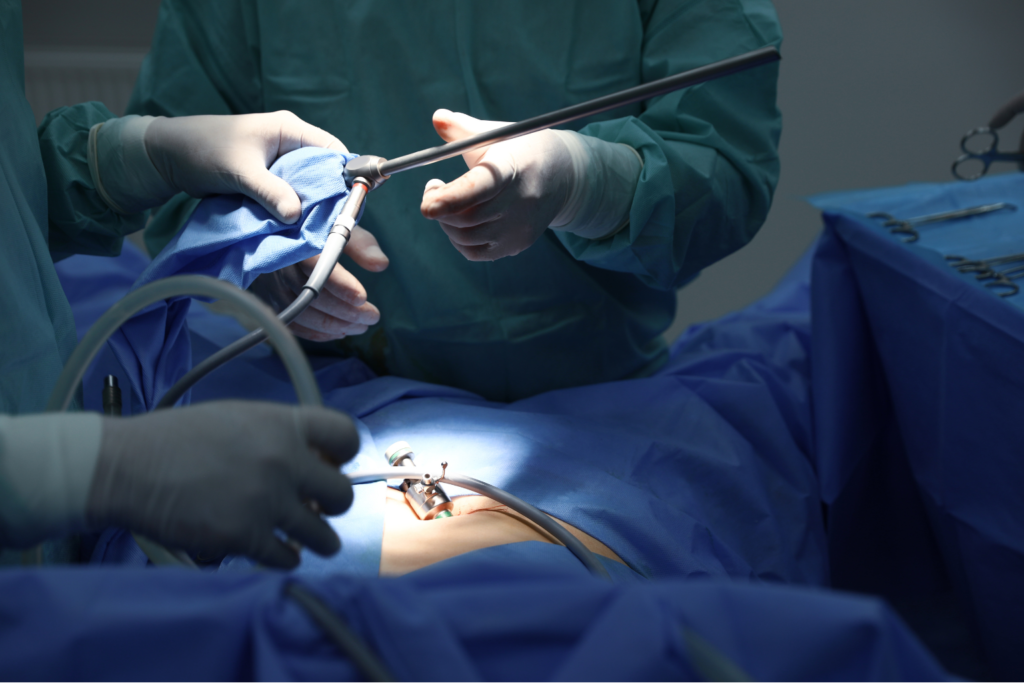
Laparoscopy — minimally invasive “keyhole” surgery performed through a few small incisions using a camera and fine instruments — remains the gold standard for both diagnosing and treating endometriosis in the same sitting. During the procedure, I can:
- Directly visualise and map the extent and location of endometriotic implants, adhesions, and endometriomas — something no scan can fully replicate.
- Excise or ablate the diseased tissue, restoring normal pelvic anatomy wherever possible.
- Carefully separate adhesions that may be binding the ovaries, tubes, uterus, or bowel together.
- Preserve ovarian tissue and fertility potential as a priority, particularly in women who wish to conceive in the future.
- Take tissue samples for histopathological confirmation, so the diagnosis is certain, not presumed.
Because laparoscopy uses small incisions rather than a large abdominal cut, patients typically experience less postoperative pain, a shorter hospital stay, and a faster return to normal life compared to open surgery — which matters a great deal for women who’ve already spent years fatigued by chronic pain. I’ve explained the trade-offs in more depth in when laparoscopic surgery is better than open surgery, if you’d like to understand how that decision is made.
It’s worth noting that surgery is not always the first step — for milder disease, hormonal therapy and pain management are often tried first. The right approach depends on the severity of symptoms, the extent of disease, the patient’s age, and — critically — whether she’s trying to conceive now or in the near future. This is a decision I always make together with my patient, not for her.
When Should You Consult a Specialist?
You don’t need to wait for symptoms to become unbearable before seeking help. I’d encourage you to book a consultation with a gynaecologist — ideally one with specific experience in laparoscopic management of endometriosis — if:
- Period pain is severe enough to interfere with school, work, or daily life
- Your pain has been gradually worsening over months or years
- Over-the-counter painkillers no longer give adequate relief
- You experience pain during intercourse
- You have unexplained bowel or bladder symptoms tied to your menstrual cycle
- You’ve been trying to conceive for six months to a year (or longer, depending on your age) without success
- A previous ultrasound was reported as “normal” but your symptoms haven’t improved
Bring a symptom diary if you can — noting when pain occurs relative to your cycle, its severity, and anything that seems to trigger or relieve it. This kind of detail genuinely speeds up diagnosis and helps guide the right treatment plan from the first visit.
A Final Word
Endometriosis is common, it is treatable, and it is not something you have to simply live with because “periods are supposed to hurt.” The years-long delay in diagnosis that so many women experience isn’t inevitable — it happens because symptoms get normalised, misattributed, or missed on imaging. The moment you start taking your pain seriously and get properly evaluated, you take back a huge amount of control over your own health and fertility.
If you’ve been living with painful, disruptive periods for years and have never had a clear answer as to why, I’d encourage you to get evaluated. Early diagnosis genuinely changes outcomes — for pain relief, for fertility, and for quality of life.
Book Your Endometriosis Consultation in Ahmedabad
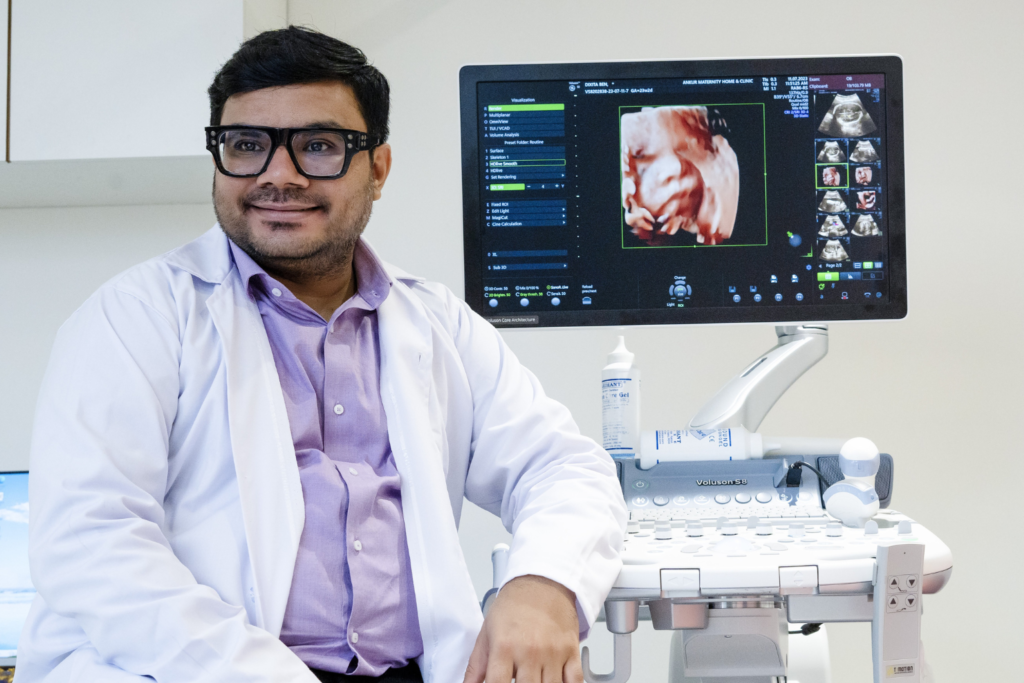
If two or more of the symptoms above sound like your experience, you don’t have to keep guessing. Dr. Mohil Patel offers focused evaluation and advanced laparoscopic treatment of endometriosis at Ankur Maternity Home & Clinic, Ahmedabad — including fertility-preserving surgery for women planning a pregnancy. Bring your symptom diary and any previous scan reports, and you’ll leave the first visit with a clear plan instead of another prescription for painkillers.
Prefer to ask a question first? Contact the clinic and the team will guide you on what to bring and what to expect.
Dr. Mohil Patel is an Advanced Laparoscopic and Gynae-Endoscopic Surgeon (MBBS, DGO, FMAS – Mumbai) practising at Ankur Maternity Home & Clinic, Ahmedabad, and Programme Director of the DRISHTI Fellowship in advanced gynaecological endoscopy. This article is for general informational purposes and does not replace an in-person medical consultation. If you’re experiencing symptoms of endometriosis, please consult a qualified gynaecologist for personalised evaluation and care.
Frequently Asked Questions
Q1. Why does endometriosis take so long to diagnose?
Because its symptoms overlap with common conditions like IBS and urinary infections, are often mistaken for “normal” period pain, and can be missed on standard ultrasound. A definitive diagnosis traditionally requires laparoscopy, which many patients and doctors delay trying.
Q2. Can endometriosis be diagnosed without surgery?
A detailed history, pelvic examination, and imaging (ultrasound/MRI) can strongly suggest endometriosis, especially when endometriomas are present. However, laparoscopy remains the most definitive method, as it allows direct visualisation and biopsy of lesions that may not appear on scans.
Q3. Does endometriosis always cause infertility?
No. Many women with endometriosis, particularly mild to moderate disease, conceive naturally. Fertility impact depends on the extent and location of disease. Early diagnosis and appropriate treatment — surgical or otherwise — improve the chances of conception.
Q4. Is laparoscopic surgery the only treatment for endometriosis?
No. Treatment depends on symptom severity, extent of disease, and whether the patient wishes to conceive. Options range from pain management and hormonal therapy to laparoscopic excision surgery for more significant or fertility-affecting disease.
Q5. When should I see a specialist for suspected endometriosis?
If period pain disrupts your daily life, doesn’t respond to standard painkillers, is accompanied by pain during intercourse or bowel/bladder symptoms, or if you’ve had difficulty conceiving — it’s time for a proper evaluation with a gynaecologist experienced in endometriosis management.